Case Study
CloudPACS
A scalable, cloud-native Picture Archiving and Communication System, built to replace hardware-dependent PACS.
Zero-footprint
Web viewer, no client install
12-person team
10 developers, 2 QA engineers
Full DICOM + HL7
Standards-compliant imaging and orders
Subject & Issue Resolved
Traditional PACS deployments are hardware-dependent, expensive to scale, and hard to access
remotely. CloudPACS addresses the need for a scalable, cost-effective, and accessible radiology
imaging solution that replaces that model: a cloud-native PACS (with an on-premise option
available) that lets healthcare institutions move to a filmless diagnostic workflow with
cloud-based accessibility, mobile support, and integrated reporting — while still
supporting the DICOM and HL7 standards the rest of the hospital runs on.
What We Built
CloudPACS integrates the core imaging functionality — storage and retrieval of DICOM data
and diagnostic reporting — into a modern, filmless workflow aimed at accessibility,
scalability, and cost-efficiency for hospitals and diagnostic centers. Scope covered the PACS
system itself, order management, cloud-based access, and the reporting system, built to:
- Support the full DICOM standard.
- Integrate HL7 for order and result communication.
- Serve a zero-footprint web viewer — no client install required.
- Work from mobile devices.
- Run on a cloud-based architecture built for scalability and redundancy.
Architecture
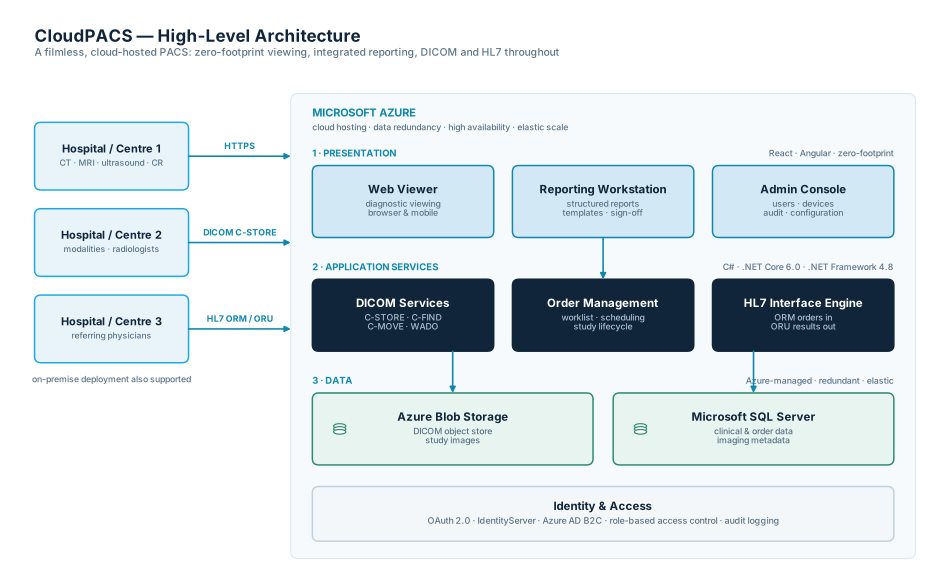
Multiple hospitals and diagnostic centers connect into a single Azure-hosted backend serving viewer, admin, and reporting apps.
Usage & Result
CloudPACS is actively deployed in healthcare institutions that need centralized, cloud-based
imaging access — particularly:
- Radiologists requiring remote reporting access.
- Hospitals aiming to reduce physical storage and infrastructure costs.
- Centers requiring an integrated DICOM viewer and HL7 workflow.
- Multi-location diagnostic networks needing unified access to imaging data.
The system has improved reporting turnaround time, made patient data easier to access, and
reduced the need for physical infrastructure — aligning with the broader shift toward
digital healthcare.
Team & Tech Stack
A cross-functional team of 12 — 10 developers and 2 QA engineers, spanning frontend,
backend, database, and DevOps — delivered CloudPACS.
C#
.NET Framework 4.8
.NET Core 6.0
React.js
Angular
Microsoft SQL Server
PostgreSQL
OAuth 2.0
Azure B2C
Microsoft Azure
Work with us
Ready to move your PACS
to the cloud?
Tell us about your project. We'll tell you honestly whether and how we can help.